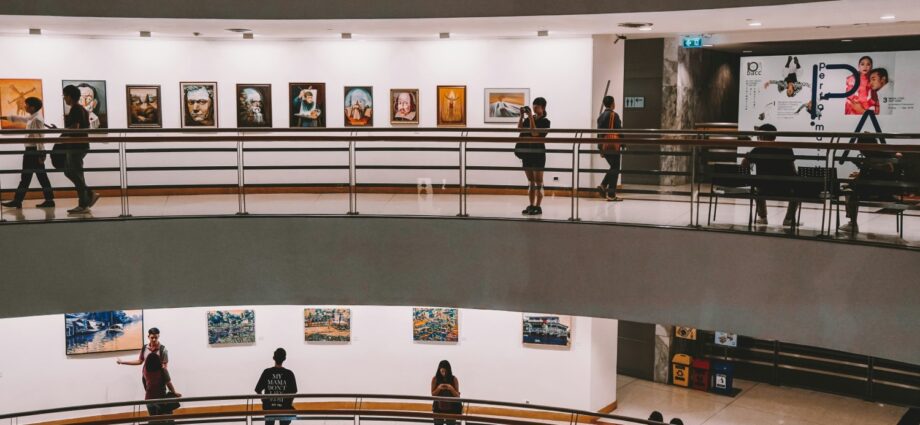
The first thing a young visitor often notices in a traditional gallery is not the art. It is the atmosphere. The hush. The white walls. The subtle sense that you are supposed to know how to behave before you have even looked at a single work. For people who already feel at home in art spaces, that mood can read as calm and focused. For everyone else, especially students and first-time visitors, it can feel like walking into a room where the rules were explained somewhere else.
Pop-up galleries change that equation. They still present serious contemporary art, but they do it in places that feel more open to discovery: empty storefronts, repurposed industrial buildings, community spaces, courtyards, cafes, former offices, even the corner of a festival venue. The work may be ambitious. The ideas may still be challenging. But the frame around the experience is different. It feels less like an exam and more like an invitation.
That difference matters. Pop-up galleries have become one of the most effective ways to make temporary exhibitions feel socially approachable without flattening the art itself. They lower the threshold for entry, create a sense of immediacy, and often build the kind of active interaction that young audiences respond to instinctively.
Why the traditional gallery can feel off-limits
The intimidation factor around contemporary art is rarely just about the work. It is usually a mix of signals. Architecture can be imposing. Labels may assume background knowledge. Staff and regular visitors can seem fluent in a cultural language that newcomers do not yet speak. Even the fear of saying something ‘wrong’ in front of an artwork is enough to make people stay quiet or leave quickly.
Young audiences are especially sensitive to these cues. Not because they are less curious, but because they are often still deciding whether art spaces are meant for them at all. A student who would gladly spend an hour discussing an album, a film scene, or a street mural may freeze in a gallery if the environment suggests that interpretation belongs to insiders.
Pop-up formats soften that pressure. When art appears in an unexpected location, the visitor is not stepping into a space loaded with as many inherited expectations. The encounter starts on more neutral ground.
A temporary format makes art feel closer
There is something psychologically different about a pop-up. It is finite. It exists for a weekend, a week, maybe a month, and then it is gone. That temporary quality creates energy. It gives the visit the feeling of an event rather than an obligation. For younger audiences used to fast-moving cultural discovery, that matters more than institutions sometimes admit.
A permanent museum can always be visited ‘later.’ A pop-up gallery cannot. That small shift produces urgency without turning the experience into marketing hype. It simply makes showing up feel worthwhile now. In practical terms, temporary exhibitions often benefit from word-of-mouth, group visits, and spontaneous attendance. People are more likely to text a friend and say, ‘Let’s go tonight,’ when the event has a clear time limit and a distinctive setting.
This is one reason pop-up galleries often feel lively even when they are modest in scale. They do not need the grandeur of a major institution to generate momentum. The temporary frame does some of that work on its own.
Young audiences want participation, not just access
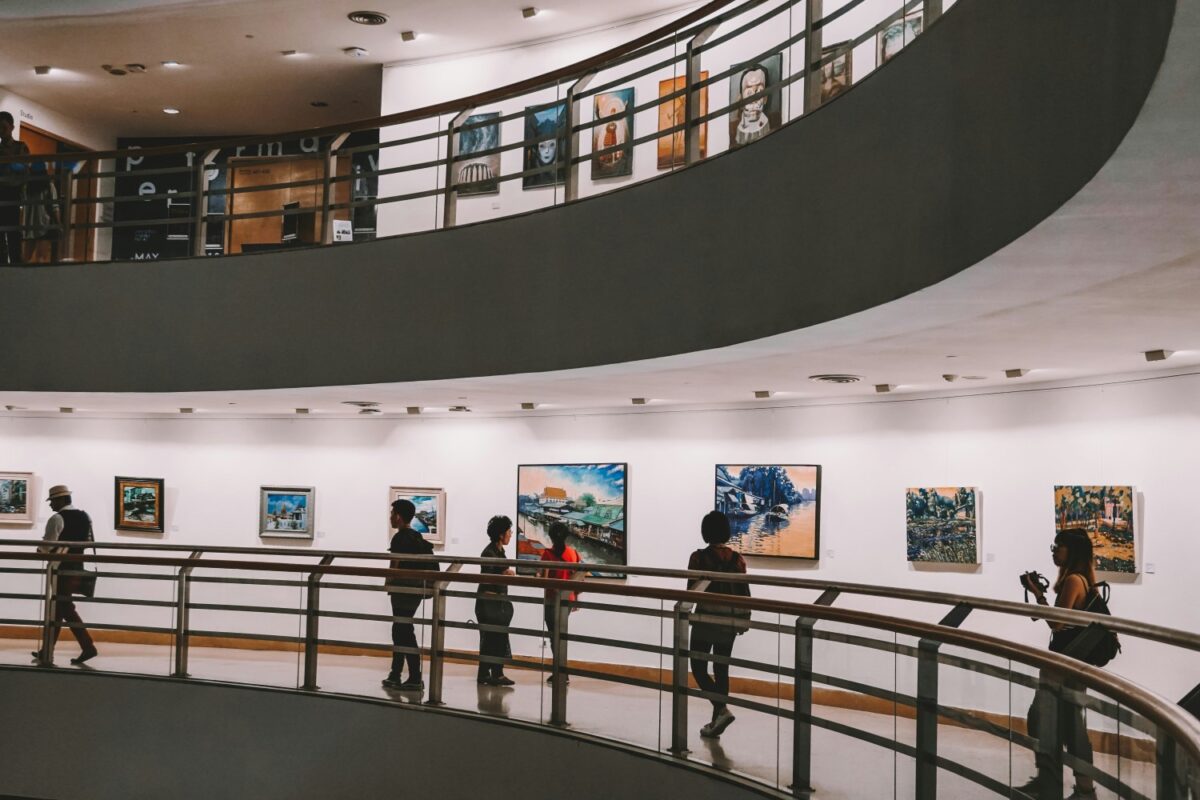
Accessibility is not only about location or price. It is also about whether the experience allows some form of participation. Young visitors are often drawn to cultural spaces where they can do more than passively consume. That does not mean every pop-up needs a selfie wall or a touch screen. It means people want a role inside the experience.
The best pop-up galleries understand this instinctively. They build in artist talks, informal walkthroughs, zine tables, live making sessions, collaborative walls, screenings, performances, or simple moments where questions are welcome. Even a short text prompt – ‘What would you add to this room?’ or ‘Which work stayed with you?’ – can shift the mood from observation to exchange.
This is where pop-ups overlap naturally with youth engagement. They give young audiences permission to test their own responses before they have polished language for them. That is often the point where contemporary art stops feeling intimidating and starts feeling personal.
What makes a pop-up work for real people
Not every temporary exhibition automatically feels welcoming. Some are still coded for insiders, just in a rawer room. The most effective pop-up galleries tend to share a few qualities:
They are easy to enter, physically and socially. The threshold matters. Clear signage, visible opening hours, approachable staff, and a layout that does not make newcomers feel watched all make a difference.
They offer enough context without overexplaining. A concise wall text, a short curatorial note, or a few lines from the artist can give visitors a way in without telling them what they are supposed to think.
They leave room for conversation. Seating, programming, and human presence matter. People stay longer when the space suggests that discussion is part of the experience, not a disruption of it.
They feel rooted in a place. Pop-up galleries are strongest when they connect to local rhythms – a neighborhood, a school network, a festival, a shared concern, a local creative scene. That is when temporary exhibitions start to feel like community art rather than just short-term display.
None of this requires dumbing contemporary art down. It requires attention to hospitality. That is a different task entirely.
A more useful gateway into contemporary art
For young audiences, the appeal of pop-up galleries is not simply that they are trendy or photogenic. It is that they make room for first encounters without treating first-time visitors like a problem to solve. They bring art into lived space, reduce the social stiffness that keeps many people at a distance, and create interactive art experiences that feel contemporary in more than name.
That may be their most valuable contribution. Pop-up galleries remind institutions that access is not only about who is allowed in. It is about who feels addressed once they arrive. When a temporary exhibition gets that right, contemporary art does not lose its complexity. It just becomes easier to approach – and far more likely to matter.
